

How to Validate Your Business Idea Before Writing a Line of Code
Most solo founders build the wrong thing. Not because they lack talent or discipline, but because they fall in love with their solution before they’ve confirmed anyone actually has the problem. I’ve been there – six weeks into building a SaaS tool, only to discover that my target users were perfectly happy with a spreadsheet. Validation isn’t a phase you skip to get to the fun part. It is the fun part, if you approach it correctly.
This guide walks you through a concrete validation sequence I use with every new idea – one that costs almost nothing, takes days rather than months, and gives you real signal instead of polite feedback from friends.
Why Most Validation Advice Fails Solo Founders
The standard advice – « talk to your customers » – is correct but dangerously incomplete. Talking to people tells you what they say they want. What you need to know is what they’ll actually pay for or change their behavior for. Those are very different things.
The other failure mode is « build a landing page and see if people sign up. » Email signups are vanity metrics. Someone entering their email to « get early access » costs them nothing and commits them to nothing. It feels like validation. It isn’t.
Real validation requires a behavioral signal – someone taking an action that has a cost: paying money, blocking time on their calendar, referring a colleague, or switching away from a tool they already use.
Step 1 – Write the Problem Statement Before Anything Else
Before you touch a tool, a mockup, or a landing page, write one paragraph that answers three questions:
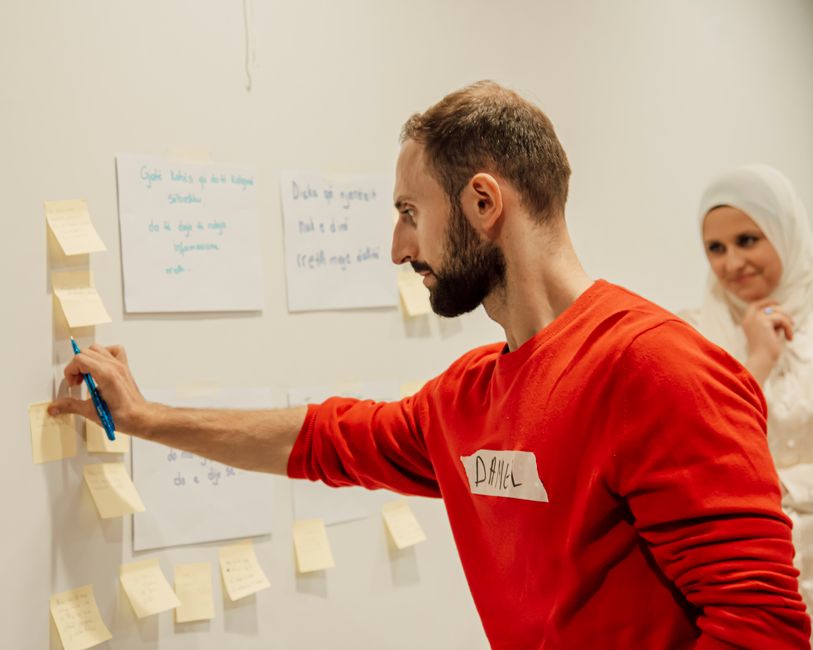
- Who specifically has this problem? (Not « small businesses » – be precise: « freelance UX designers who charge by the hour and manage three or more clients simultaneously »)
- What are they doing today to solve it? (The existing workaround is your real competition, not other software.)
- Why is the current workaround painful enough that they’d switch?
If you can’t answer all three with specificity, you’re not ready to validate – you’re still in the ideation phase. That’s fine, but be honest about where you are.
Step 2 – Find 10 Real People Who Match Your Profile
Not your network. Not your friends. People who genuinely match the specific profile you wrote in Step 1. Here’s where solo founders get lazy and it costs them everything.
Concrete places to find them:
- Reddit communities – Search for the problem, not the solution. Read threads where people complain about the exact pain you’re solving.
- LinkedIn – Use the search filters to find people by job title, company size, and industry. Send a short, direct message (not a pitch – a question).
- Slack and Discord communities – Almost every niche has one. Join, lurk for a week, then post a genuine question.
- Existing customers of adjacent tools – Look at the reviews on G2 or Capterra for tools in your space. People who leave negative reviews are telling you exactly what’s missing.
Your goal is 10 conversations, not 100. Ten deep conversations beat 100 survey responses every time.
Step 3 – Run a Problem Interview, Not a Solution Pitch
This is the most misunderstood step. A problem interview is not a demo. You are not showing anything. You are not explaining your idea. You are listening.

A simple script that works:
- « Tell me about the last time you dealt with [the problem]. »
- « What did you do to solve it? »
- « How much time did that take? »
- « Have you looked for a better solution? What stopped you? »
- « If this problem disappeared tomorrow, what would that be worth to you? »
The last question is the one most founders skip. It’s also the most important. The answer tells you whether you’re solving a vitamin problem (nice to have) or a painkiller problem (must fix). Only painkiller problems support a business.
After 10 interviews, look for patterns. If at least seven out of ten people describe the same pain in similar language, you have a real problem worth solving. If everyone describes a different pain, your target audience is too broad.
Step 4 – Test Willingness to Pay Before You Build
Here’s the insight most validation frameworks leave out: you can ask for money before you have a product. Not as a scam – as a pre-sale or a paid pilot.
After your problem interviews, go back to the three or four people who expressed the most pain. Tell them you’re building a solution and offer them a « founding member » deal – access to the product for a reduced lifetime price or a heavily discounted first year, in exchange for paying now and giving you feedback as you build.
If nobody takes you up on it, that’s signal. If two or three people pay, that’s stronger validation than a thousand landing page signups. I’ve seen founders raise their first few thousand dollars this way before writing a single line of code – and those early customers became their best product advisors.
This approach also forces you to articulate your value proposition clearly enough that a stranger will hand over money. That clarity is itself a valuable output of the process. For more on early pricing strategy, charging your first customers more than you think you should is a counterintuitive move that consistently works.
Step 5 – Build the Smallest Possible Proof of Concept
Only after you have behavioral signal – ideally money, or at minimum a strong verbal commitment with a specific follow-up action – should you build anything. And even then, build the smallest possible version.

The goal of your first version isn’t to impress people. It’s to deliver the core value proposition with the minimum infrastructure. A few approaches that work:
- Concierge MVP – Do the thing manually for your first customers. If you’re building a data enrichment tool, enrich their data by hand for the first month. You’ll learn more than any automated system would teach you.
- Wizard of Oz MVP – Build a front-end that looks automated but is actually powered by you behind the scenes. Customers experience the product; you figure out what to automate later.
- No-code prototype – Tools like Notion, Airtable, or Glide can simulate a product experience well enough to test core assumptions without engineering time.
The discipline here is resisting the urge to build features nobody asked for. Every feature you add before validation is a bet you’re making with your own time and money.
The Validation Trap That Kills Good Ideas
There’s a counterintuitive failure mode I’ve watched kill genuinely good ideas: over-validating. Some founders run 50 interviews, build three MVPs, and run two rounds of user testing – and never actually launch. Validation is a tool to reduce risk, not eliminate it. At some point, you have to ship.
A useful rule: if you have at least three paying customers or five strong verbal commitments with follow-up actions, you have enough signal to build a first version and start iterating. More validation beyond that point is often procrastination wearing a productive disguise.
How Content Fits Into Validation
One underused validation tactic: write about the problem before you build the solution. Publishing a detailed article on the pain your product solves does two things simultaneously – it attracts the exact audience you want to talk to, and it tests whether people care enough to engage with the topic.
If your article gets shared in the communities where your target users hang out, people comment with their own experiences, and you get inbound requests to join a waitlist – that’s organic validation. If it gets zero traction, that’s signal too.
Building a content presence early also gives you a distribution channel before you have a product. For a practical approach to this, see how to build a content engine that works without a team. If you want to automate the content side of this validation process, ForgR deploys AI agents that write, publish, and optimize your articles automatically – so you can stay focused on customer conversations while your content works in the background.
What Good Validation Actually Looks Like
To make this concrete: I once validated a B2B tool for operations managers by spending two weeks on LinkedIn and in three Slack communities. I had 11 conversations, identified a consistent pain around manual reporting, and offered five of those people a paid pilot at a flat monthly fee. Three said yes immediately. One asked for a discount and then said yes. That was enough. I built a concierge version for 60 days, then automated the parts that were taking me the most time.
The whole validation process cost me roughly 20 hours and a small amount of outreach effort. What it saved me was the months I would have spent building a full product for a problem that might not have been real enough to monetize.
Validation isn’t about certainty – it’s about making your first bet with better information. The founders who skip it aren’t braver than those who don’t. They’re just less informed.